Skip to content

Guitar Center RFID Requirements for Suppliers

What Manufacturers Need to Know

for Retail RFID Requirements

If your company supplies products to Guitar Center, RFID tagging is about to become part of your production and shipping process. Guitar Center’s RFID requirements are part of a phased source-tagging program that will ask suppliers to apply item-level RFID tags to merchandise before it ever ships to a distribution center.

If you’ve never worked under a retail RFID mandate before, we’ll walk you through the requirements: certified inlays, unique EPC encoding, approved tag placement, sample validation, and reliable quality control across every production run.

Here’s what RFID supplier compliance involves, why music gear makes it more complex than apparel, and where to start.

guitar center rfid requirements

Download Your Supplier Readiness Guide

Follow along with our in-depth guide to get your operation ready for Guitar Center’s new RFID requirements. Worried about picking the right type of tag? Not sure where to start with the encoding process? Don’t stress the details – that’s what we’re here for!


rfid requirements for retail suppliers

What Do RFID Mandates Require from Suppliers?

Retail RFID mandates are becoming more common and are often consistent across major retailers. Walmart, Target, Macy’s, Nordstrom and more have landed on the same GS1-based framework that Guitar Center’s program will follow.

What RFID Tags Do Retailers Require?

Retail programs use passive UHF RAIN RFID. For US shipments, tags operate in the FCC 902-928 MHz band and must be compatible with the GS1 EPC UHF Class 1 Gen2 standard, also published as ISO/IEC 18000-63

Most retailers also require inlays certified through the Auburn University’s RFID Lab’s ARC program. ARC assigns performance specifications by product type and maintains a public list of inlays that have passed each one. Guitar Center will be requiring tags to qualify for one of the ARC specifications they’ve assigned.

Can I use any ARC-certified RFID tag?

No. Approval applies to the specific inlay model and application, not to the entire manufacturer. Keep that in mind when applying for approvals.

How is RFID Encoding and Serialization Handled?

Every individual tag carries an SGTIN-96 EPC built from the product’s authoritative GTIN plus a unique numeric serial number. That serial is what turns a SKU into an individually traceable physical item.

The supplier – or its service provider – owns that data, so it’s critical that the workflows are set up correctly. Here are some quick tips on getting that workflow right:

  • Use the GTIN already accepted in the retailer’s item master. Don’t invent or substitute one during encoding.
  • Issue a unique serial within each GTIN, and never reuse one. If more than one factory or encoder commissions tags for the same GTIN, allocation has to be coordinated across all of them.
  • Permalock EPC memory before shipment. Encoded-but-unlocked tags are typically rejected outright.
  • Verify by read-back at the encoder, and run lot-level QC that catches duplicates.
  • Quarantine and destroy failed tags. Never recycle one into another shipment.
  • Retain encoding records – GTIN, full EPC, serial, date, lot, encoder ID – because you’ll be asked for them.

How Do I Prepare For Guitar Center RFID Compliance?

Suppliers who start early will spend a lot less than suppliers who start when the deadline hits. Here’s five things to get you started now:

Assign one RFID program lead

RFID touches packaging, procurement, IT, and ops all at once. Give someone authority across all four and name owners for GTIN data, artwork, encoding, and QC.

Get your scope in writing

Don’t assume your entire catalog is in scope, and don’t start big production changes on assumptions. Confirm which items are affected and when your cutover date is – in writing – before you spend anything.

Choose your RFID tagging path

Encode in house, or use a service? Lower volumes usually favor outsourcing while higher volumes favor an internal print-and-encode workflow.

Stand up serialization

Whichever path you choose, you’ll need a system that issues unique EPC serials, prevents collisions across sites, and keep records.

Build in time for sample approval

Production-intent samples have to be approved in writing before volume production. Leave room for a failed submission and resubmission, because changing any aspect will require you to revalidate.

RFID Tagging for Musical Instruments

Most published RFID guidance is written for apparel, where a hangtag on a cotton garment reads cleanly every time. Music gear presents different problems when it comes to RFID.

RFID performance degrades near metal, foil, magnets, batteries, liquids, dense electronics, and tightly stacked product – which describes most of a music retailer’s assorted goods. Guitar strings, tuners, bridges and hardware are metal. Pickups and speaker drivers can house magnets and string packaging often uses a foil-laminated inner pouch that can interfere with RFID signals.

RFID tag placement also has to respect the product, not just the radio scanning it. Adhesive from a sticker on an instrument, microphone, or speaker grille can damage merchandise. And any tag applied to a battery or near a terminal creates safety issues, not just RF ones.

The practical solution is to tag the packaging rather than the product in most electronic categories. For guitars and basses, the recommendation is to embed or integrate RFID inlay in a repeatable approved location. Keep the inlay antenna clear of staples, folds, perforations, and any metallic ink or foil decorations.

For RFID tag placement fundamentals, GS1 US publishes a free EPC/RFID Tag Placement Guideline that covers general merchandise classes.

View our RFID Requirements Infographic

rfid retail mandate

Get More From Your RFID Investment

Retailers deploy RFID because item-level visibility pays for itself with faster inbound receiving, loss prevention, outbound verification, and accurate available-to-promise for omnichannel fulfillment.

Suppliers can capture even more ROI from using the same RFID tags.

Once your finished goods carry unique RFID identities, those ID’s can support work-in-process tracking, finished-goods inventory, faster cycle counts, receiving and put-away, pick-and-pack verification, shipping accuracy, serialized, traceability, and returns processing all before the product leaves your facility.

So, instead of treating a retail RFID mandate like a compliance cost to minimize, start thinking about what else that infrastructure can do for your business once it’s place.

RMS Omega can help. We offer support and services at every stage: from planning, to implementation, to ongoing support.

guitar center rfid requirements

Our RFID/RTLS Solutions

RMS Omega provides comprehensive RFID and RTLS solutions for advanced data capture systems that enhance visibility, automate processes, and promote compliance across your key operations.

RFID Inventory management illustration

Inventory Management

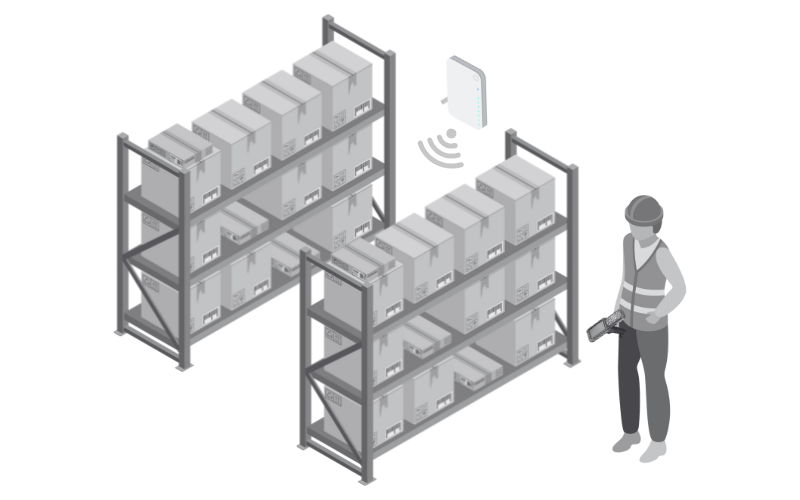
Perform rapid inventory counts and confirm item locations using mobile or fixed readers.

Learn More

RFID Asset Tracking Illustration

Asset Tracking

Track assets large and small with fixed and mobile readers for pinpoint item locations.

Learn More

Work-In-Process Monitoring

Monitor parts through production stages for visibility and compliance.

Learn More

RFID dock door verification illustration.

Checkpoint Validation

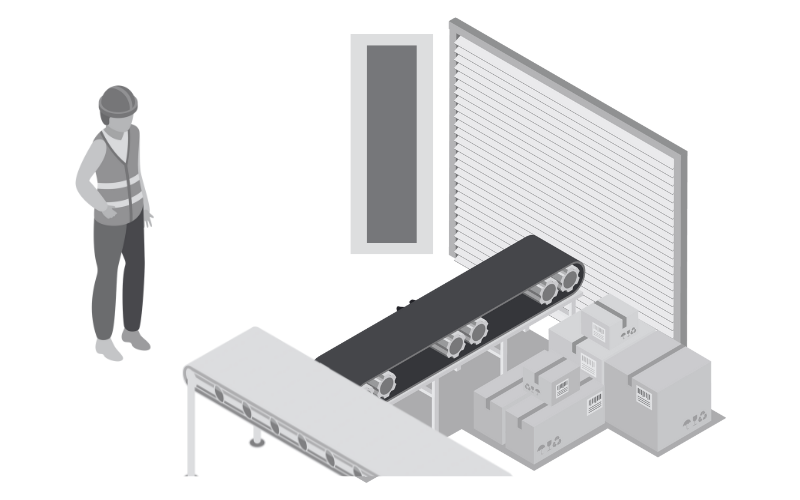
Validate products instantly by scanning items as they pass through dock doors and other critical junctures.

Learn More

RFID Check in Check out illustration

Check-In/Check-Out

 Keep a chain of custody over shared assets, enhancing visibility and accountability.

Learn More

RFID Location Monitoring Illustration

Location Monitoring

Illuminate business operations by capturing location data over critical products, personnel, and processes.

Learn More

Prepping for Guitar Center's RFID Requirements?

RFID Tags, Labels, and Software

RFID projects involve more than just choosing the right tag. RMS Omega designs and implements complete RFID source-tagging solutions – from ARC-approved labels and inlays, RFID printers and encoders, to integration with your ERP or WMS.

We can help you assess which products are affected, what your RFID tagging workflow should look like, and where RFID can do more for your operation.


RMS Omega managed services and RMS Omega professional services for rugged device support and wireless network management

Here's What Some Of Our Customers Say

Some of Our Supply Chain Customers