Skip to content

BLE Asset Tracking & Bluetooth Tracking Solutions

Stop Losing Time Looking for Assets with a BLE Tracking Solution

Gain visibility into where your equipment, assets, people, parcels, and other moving resources are with Bluetooth Low Energy tracking technology. 

Shared equipment has a habit of ending up where no one expects it. Shared devices move between shifts. Carts get left in another department. Tools, totes, and equipment disappear into staging areas. 

Searching for misplaced assets takes time and those costs add up quickly. Teams may spend hours tracking down equipment that was never actually lost, while unnecessary replacements create additional expenses. The delays can also disrupt the next shift, patient, or shipment. 

Bluetooth Low Energy (BLE) tracking gives your team visibility to where tagged resources are, where they were last detected, and how they move throughout your operation. Alerts and location history can also help identify when something leaves an authorized area, sits too long, or ends up in the wrong place.
Bluetooth Low Energy BLE Square Image (RFID vs UWB vs BLE)

What is BLE Asset Tracking?

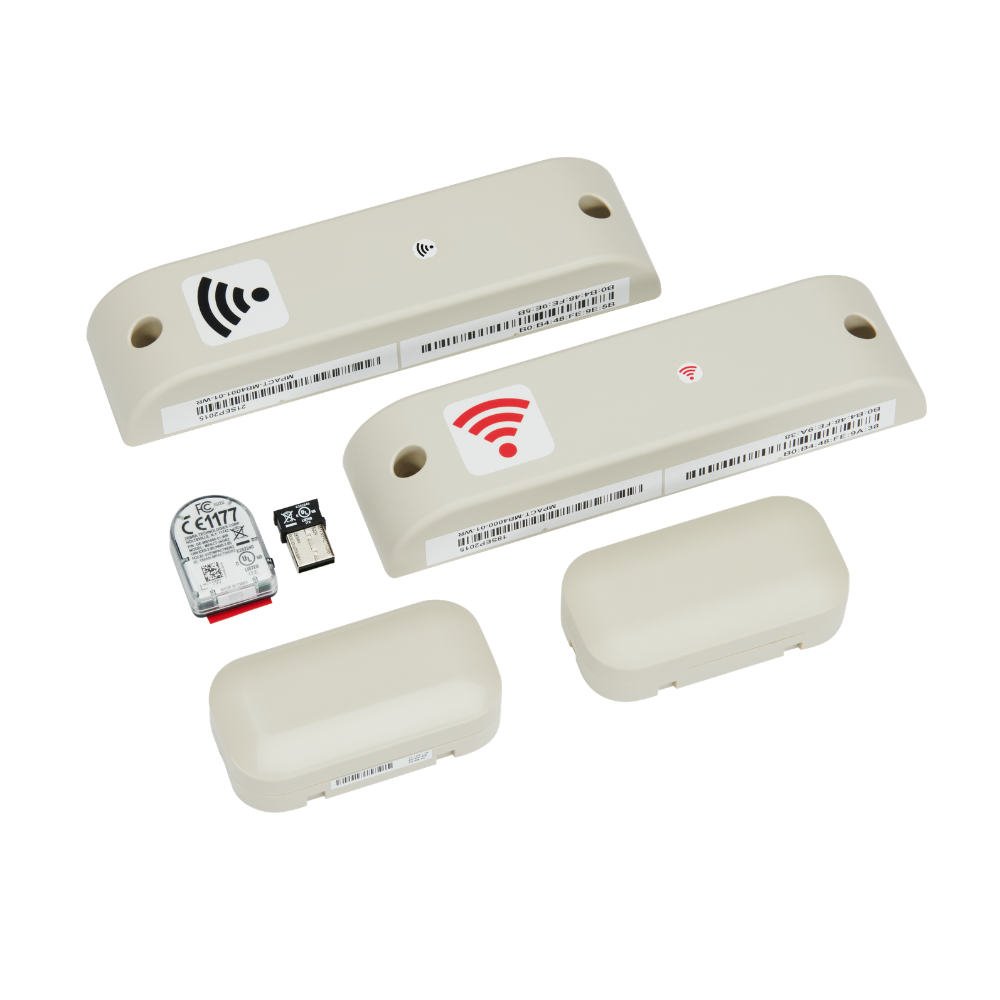
BLE asset tracking uses small, battery-powered Bluetooth Low Energy tags, labels, badges, or beacons to monitor the location and movement of equipment, people, parcels, materials and other resources. BLE tags broadcast signals that are detected by fixed gateways or compatible Bluetooth-enabled devices. Tracking software turns those signals into room-level or proximity-based location data.  
 
If you’ve ever used your phone to track down your keys, you already get the concept. Enterprise BLE tracking runs on the same idea, scaled up to hundreds or thousands of items and built with the alerts, history, and operation-specific controls. 

How Bluetooth Low Energy Tracking Works:

  1. Tag It: Attach BLE tags, labels, or beacons to whatever you want to track: equipment, carts, totes, badges, and more. Options range from thin adhesive labels to rugged, reusable tags built for tough environments.
  2. Detect It: Tags send out a small signal at regular intervals. Two kinds of hardware can pick it up – fixed gateways around your facility, and Bluetooth-enabled devices your team already carries.
  3. See It: Location software turns those signals into a clear picture of what’s where, what’s nearby, and when it was last seen. From there, you can set up zones, get alerts, and look back at movement history.

What Makes Up a BLE Tracking System?

BLE Tags, Labels, & Beacons

Battery-powered devices attached to equipment, assets, containers, badges, or other items transmit a Bluetooth signal at configured intervals.

Gateways or Bluetooth-Enabled Mobile Devices

Fixed gateways or compatible smartphones, tablets, and enterprise handheld computers detect nearby BLE signals.

Network & Connectivity

Detected information is transmitted to the tracking application through your wired, wireless, cellular, or other network infrastructure.

Location Intelligence Software

Software turns those detections into useful information – location, last seen, movement history, zones, alerts, reports, and searchable asset records.

What Can You Track with Bluetooth Low Energy?

The short answer is almost anything! Bluetooth low energy technology can support a wide range of tracking applications.

  • Assets: Shared equipment, tools, mobile devices, carts, vehicles, reusable containers, and high-value inventory.
  • People: Employees, contractors, visitors, and patients for safety, presence, and workflow visibility. Tracking people requires clear policies, consent, and access controls – we can help you build in those guardrails from day one.
  • Parcels & Materials: Packages, totes, shipments, work-in-process and anything else moving between checkpoints in your operation.

What Industries are a Good Fit for BLE Asset Tracking?

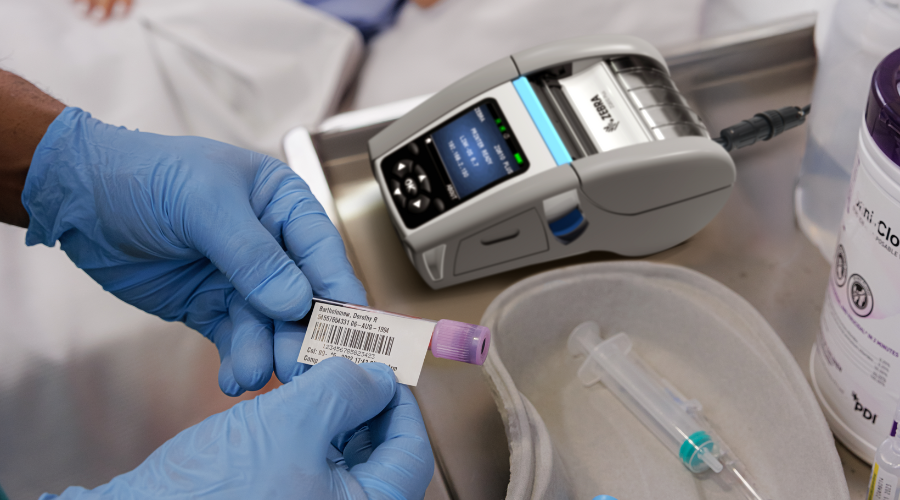
Locate shared equipment such as infusion pumps, wheelchairs, portable monitors, and other mobile clinical resources.

BLE can also be used to support patient and visitor wayfinding, optimizing staff workflows, and other location-based hospital processes.

Track tools, fixtures, carts, mobile equipment, and work-in-process as they move between production areas.

Movement history and dwell-time information can help identify bottlenecks and optimize how materials move through production.

Fixed RFID Reader and Antennas at Warehouse Aisleway

Follow totes, reusable containers, carts, mobile computers, parcels, and other resources as they move from receiving through staging and shipping.

Alerts can help identify resources that have been left in the wrong area or have remained somewhere longer than expected.

Compatible mobile devices can detect tagged tools and equipment in the field, helping technicians locate equipment and verify that required resources are available before leaving for a job.

Track equipment and other resources that frequently move between facilities, vehicles, events, storage areas, and temporary locations.

Do I Need New Infrastructure for BLE Asset Tracking?

You likely need less infrastructure for BLE tracking than you’d expect. Bluetooth is already built into most smartphones, tablets, and rugged enterprise handhelds. That means some tracking applications can run on devices your team is already carrying. This mobile approach works well for field techs, periodic check-ins, and walking an area to find a specific item.

For continuous, hands-off visibility across a facility, you’ll typically add fixed BLE gateways. How many you need, and where they go, depends on:

  • Your building layout and construction
  • How precise you need the location data to be
  • Your existing wireless network

That’s why we recommend starting with a site assessment. We look at and assess your space, network, and goals to then recommend the leanest setup that will get you the visibility you need.

What Does a BLE Asset Tracking System Cost?

A BLE tracking system can range in size and complexity, affecting the final costs. Here’s some contributing factors to the bottom-line:

  • How many items being tracked
  • The type of tags needed
  • The size of the physical space that needs coverage
  • Use of fixed gateways, mobile devices, or a mix of both
  • Software, plus any integrations with systems like your ERP, WMS, or CMMS
  • Installation, configuration, and ongoing support

Bluetooth low energy tags are relatively inexpensive, and using Bluetooth devices you already own can help keep hardware costs down.

Looking for a final dollar number? Tell us about your project, and we can get you a custom quote. 

Why Use BLE for Asset Tracking?

Low Power, Long Life: Tags and beacons run on small batteries for extended periods, which keeps maintenance low.

Works with Devices You Already Own: Many smartphones, tablets, and enterprise mobile computers can read BLE signals right out of the box.

Scales Without Blowing the Budget: Affordable tags make it practical to track more items, across more areas.

Right-Sized Accuracy: BLE typically locates items within 1-3 meters, which is called room-level or proximity-based.

Flexible Form Factors: Labels, reusable tags, badges, and wearables let you match the tag to the item.

One Technology, Many Jobs: The same setup can support asset visibility, parcel tracking, workforce safety, wayfinding, and more.

Turn BLE Location Data into Action

A dot on a map only answers one question. The real value shows up when you know where something’s been, how long it’s been there, and when something changes.

  • Real-Time Location & Presence

    Where is it? When was it last seen? Get all the answers without having to take the walk.

  • Zones & Geofencing

    Set up digital zones that mirror your physical space: departments, production areas, staging lanes, loading docks. Trigger actions when something enters, leaves, or lingers.

  • Rules & Alerts

    Nobody wants to be stuck watching the map live. Get alerts for things like assets leaving authorized areas, or items being detected where they shouldn’t be.

  • Location History

    Retrace where an item has been to investigate losses, verify workflows, and spot bottlenecks.

  • Searchable Records

    Give every tracked item a digital record with details like ID, category, owner, status, and condition. Parcels can carry tracking numbers, PO references, and carrier info to match physical items with your business systems.

  • Dashboards & Reporting

    See utilization, activity, and trends so decisions about equipment, labor, and layout come from data instead of gut feel.

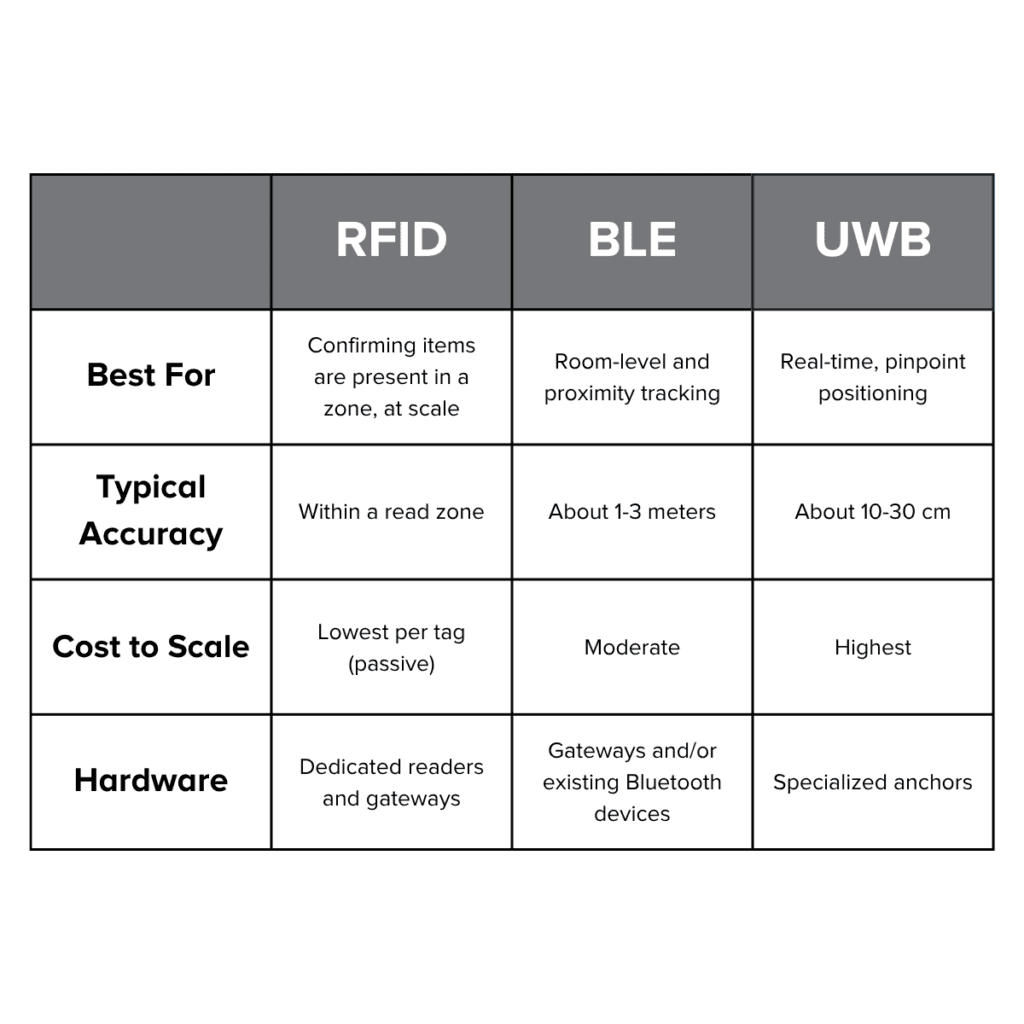
BLE vs. RFID vs. UWB: Which Tracking Technology Is Right for You?

It comes down to what your operation needs to know: presence, proximity, or precision.

Most operations end up using some combination of the three. RFID might handle bulk inventory counts while BLE keeps tabs on shared equipment, with barcoding layered in where it makes sense. The right mix depends on your unique workflow.

Bluetooth Asset Tracking Is More Than Tags and Software

A successful location tracking system depends on how the tags, devices, gateways, wireless network, software, facility, and workflows work together.

RMS Omega helps organizations design and deploy the complete solution. From determining what needs to be tracked and selecting the right technology through site assessment, infrastructure, deployment, software configuration and ongoing support.

Buying the tags and software is just the first step. Making them work in your building, on your network, with your workflows and your people is what makes or breaks a project.

  1. Discovery & Design: We assess your site, review your workflows, and define what success looks like for you before installing a thing.
  2. Tag Selection & Testing: Metal, liquids, temperature swings, and rough handling can all affect tag performance. We test tags in your unique environment before you commit.
  3. Wireless Infrastructure: We survey and optimize your network so location data comes through reliably.
  4. Deployment & Configuration: We install the gateways, configure the devices, set up zones and rules, and train your team.
  5. Ongoing Support: Help desk, repairs, and adjustments as your needs grow.

We work with RFID, RTLS, barcoding, and mobile computing every day, so our experts can recommend the right setup for you.

Tell Us About Your BLE Asset Tracking Project

RFID Tags, Labels, and Software

Let us know what you need to track and where. We’ll help you figure out the right fit for your asset tracking needs, get it stood up and deployed, and provide ongoing technical support.


RMS Omega managed services and RMS Omega professional services for rugged device support and wireless network management

Here's What Some Of Our Customers Say

Some of Our Supply Chain Customers